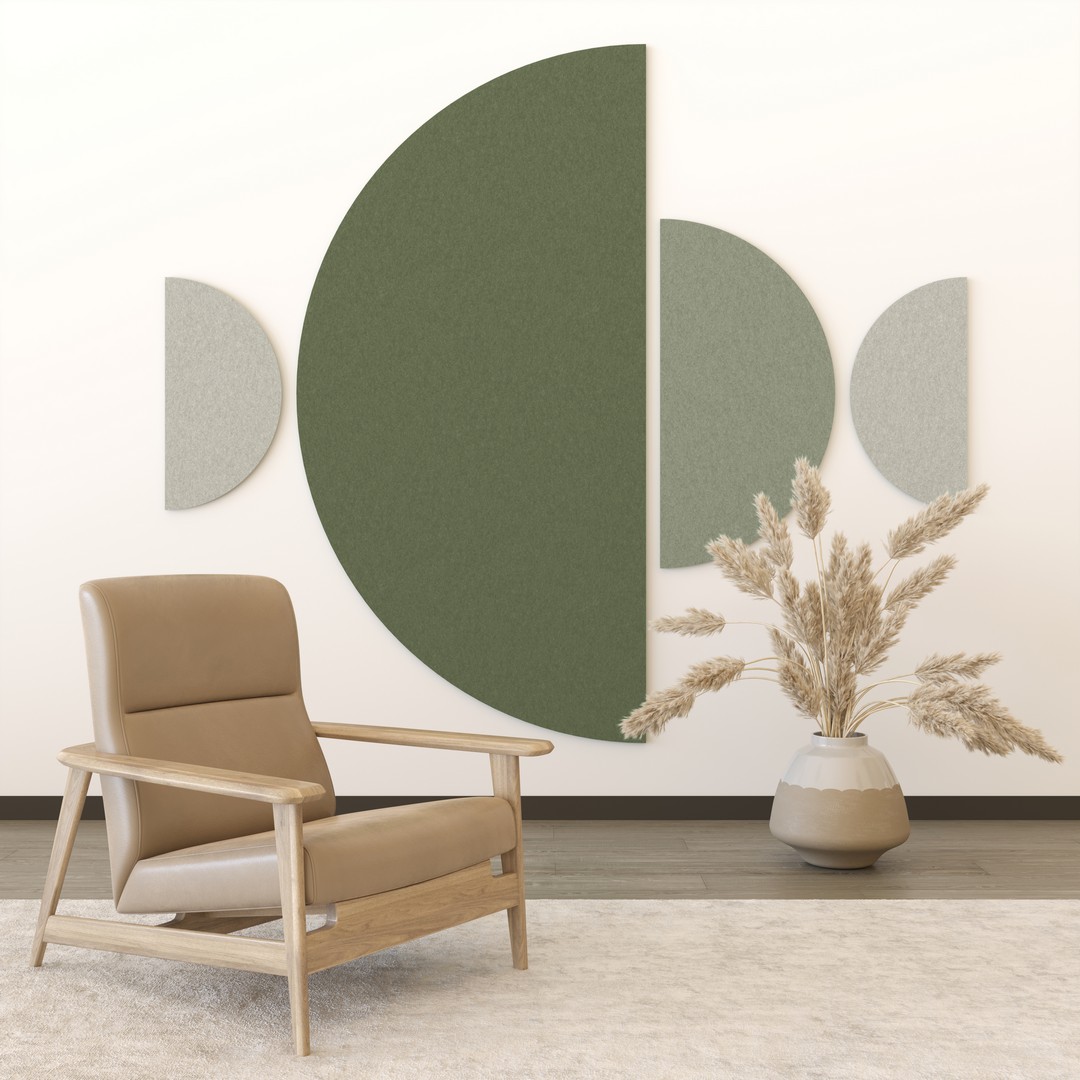
The short answer is yes. But there’s quite a bit more worth knowing before you choose one.
Introduction
I get asked this question regularly — usually by a school business manager who’s replacing thirty tired cork boards, or a facilities manager fitting out a new office floor and wondering whether the acoustic pinboards specified by the designer are going to be practical for day-to-day use.
The confusion is understandable. Acoustic pinboards sit in a slightly unfamiliar category. They look like wall panels. They’re marketed alongside acoustic treatments. So people assume they must be delicate — something you hang and admire rather than something you staple rosters to.
That assumption is wrong, and it costs people money. Either they pay extra for a product they don’t need, or they rule out a genuinely better solution because they’re not sure whether it’s fit for purpose.
Let me clear it up properly.
The Short Answer
Yes. An acoustic pinboard works exactly like any other bulletin board. You can pin notices, student work, schedules, maps, menus, project plans — whatever you’d normally attach to a cork board — and the board will hold it reliably.
Pins hold well. Acoustic performance is not compromised by pinning. The board won’t fall apart.
There are a few differences worth understanding, but none of them should stop you from using an acoustic pinboard as your primary display solution.
How Acoustic Pinboards Actually Work
Most acoustic pinboards — including Mumble By Design’s range — are made from compressed recycled PET (polyethylene terephthalate) fibre. It’s a dense, slightly fibrous material that grips a pin firmly, often better than a standard cork board.
Where cork has a tendency to crumble around a pin hole over time, especially in cheaper boards, PET fibre stays intact. The pin goes in cleanly and pulls out cleanly.
The one thing worth being honest about: acoustic pinboards are not self-healing the way some cork boards are. A fresh pin hole may remain faintly visible on some colours, particularly lighter or more uniform tones. In practice, on a board that’s being actively used as a display surface, you’re unlikely to notice — it’s covered in paper most of the time. But if you’re installing a board in a reception area and plan to remove the display entirely during school holidays, leaving a bare board on the wall, that’s worth factoring in.
Dark colours tend to hide pin holes more effectively than pale ones. If your display is intermittent, it’s worth discussing colour choice with your supplier before ordering.
Does Pinning Affect Acoustic Performance?
No. This question comes up more than you’d expect.
The acoustic performance of a PET panel comes from its density and thickness — its ability to absorb sound waves rather than reflect them. A pin hole is so small relative to the overall surface area that it has no meaningful impact. You would need to perforate the entire board to change its performance characteristics, and even then the effect would be minimal.
If acoustic performance is genuinely critical to your project — a music room, a boardroom with specific reverberation targets, a healthcare consultation space — speak to an acoustic consultant about coverage requirements. The number, size and placement of panels matters far more than whether those panels have occasional pin holes in them.
Real-World Applications
Here are some of the situations where I’ve seen acoustic pinboards used effectively as display solutions.
Retirement village lobby, regional Victoria. Management wanted to replace a dated corkboard in the main lobby where residents gathered and social activities were posted. A number of residents had hearing difficulties, and the space — hard floors, high ceilings, parallel walls — wasn’t helping. We specified a series of acoustic pinboards in a warm terracotta tone, mounted at reading height along the main corridor. The boards displayed the weekly activity schedule, resident notices and seasonal decorations. Complaints about the echo in the space reduced noticeably. The boards looked like they’d been designed for the space rather than installed in it, which mattered to management.
Primary school, outer Melbourne suburbs. The school was replacing cork boards in six classrooms and wanted something that would handle student artwork displays, timetables, and the general chaos of primary school life. The concern from the teacher coordinator was whether pins would “wreck” the boards. After a year of use, the feedback was that the boards held pins better than the old cork, were easier to keep clean, and because they came in the school colours, they’d become part of the room rather than an afterthought.
Open plan office, Sydney CBD. A fitout team was specifying display walls for a 120-person office across two floors. The primary use case was team communication boards — project status, contact lists, weekly priorities — in collaboration zones. The acoustic benefit addressed a secondary problem: speech noise from these zones was bleeding into focus areas nearby. Acoustic pinboards on the collaboration zone walls provided the display function and contributed meaningfully to zonal separation.
Community health centre, Brisbane. A health centre wanted notice boards in the waiting room for community health information. The brief was specific: no institutional look, easy to update regularly, appropriate for a space where people were sometimes anxious or unwell. A mid-format board in sage green, displaying seasonal health notices and local support service information, worked well. The calmer acoustic environment in the waiting room was mentioned in subsequent patient satisfaction surveys, though it’s difficult to isolate any single factor.
Other applications I’ve seen work well: Vision boards in co-working spaces. AFL team analysis boards in club facilities. Green screen panels in podcast studios doubling as pin-able shot lists. Collaboration boards in architecture practices. Heritage display boards in community libraries.
Cork Board vs Acoustic Pinboard: An Honest Comparison
| Feature |
Cork Board |
Acoustic Pinboard |
| Appearance |
Functional, often institutional-looking |
Contemporary; can complement interior design |
| Pin holding |
Variable; can crumble with age |
Consistently firm; grips well |
| Acoustic performance |
Minimal |
Genuine sound absorption |
| Colour options |
Natural cork (very limited) |
50+ colours |
| Custom sizes and shapes |
Limited, expensive |
Standard and custom options available |
| Sustainability |
Natural material, but sourcing varies |
Made from recycled PET |
| Self-healing pinholes |
Yes, partially |
No |
| Typical applications |
General purpose notice boards |
Display + acoustic treatment, design-led fitouts |
The practical summary: if you want something functional and cheap, cork is fine. If you want something that looks like it belongs in your space, performs acoustically, and gives you control over colour and format, an acoustic pinboard is the better choice — usually without a significant price premium once you account for the acoustic value.
A Note on Velcro and Alternative Mounting
Some schools, particularly early learning centres, prefer velcro-compatible display surfaces rather than pins. This is often about safety — reducing sharp objects in environments with young children — rather than any functional limitation of the board itself.
If velcro compatibility is a priority, you need a surface with the right texture to grip the velcro backing. A felt-covered or specific velcro-ready surface will work better in these situations than a standard acoustic PET panel.
If your team is comfortable using pins, there’s generally no reason to pay extra for velcro-ready surfaces. It’s worth being clear on how the board will actually be used day-to-day before specifying.
Buying Advice: What to Think Through Before You Order
How will it be installed? This matters more than most people realise. Acoustic pinboards can be wall-mounted directly, hung on a rail system, or in some cases attached with peel-and-stick adhesive. If there’s any chance the board will need to be relocated — you’re a renter, the office layout is subject to change, or the space is shared — avoid permanent adhesive installation. A rail or hook system gives you flexibility without wall damage.
How large does the display area need to be? It sounds obvious, but I’ve seen many cases where boards are undersized for the actual volume of information being displayed. Map out what you’ll be pinning and how much of it there is before ordering. A single large panel often looks better and functions better than several small ones awkwardly arranged.
Is acoustic performance genuinely part of the brief? If it is, don’t rely on a single decorative pinboard to solve a room acoustics problem. Get coverage specifications from an acoustic consultant. Panel size, quantity, placement and thickness all affect performance. The pinboard can absolutely contribute — but it should be part of a considered specification, not a guess.
Light or dark colours? Lighter colours can show pin holes more over time, particularly in intermittently-used display areas. If the board will frequently be left empty between display cycles, darker tones are more forgiving.
Recycled content. Mumble By Design’s pinboards are made from recycled PET — which in practice tends to mean post-consumer plastic bottles. For many clients, particularly in education and healthcare, this is a genuine sustainability benefit that supports their procurement requirements. It’s worth including in your documentation if that’s relevant to your organisation.
Frequently Asked Questions
Will pins damage the board permanently? Pins will leave small holes, but they won’t damage the structural integrity of the board. On actively-used display surfaces, pin holes are rarely noticeable. On some lighter colours, faint marks may be visible when the board is unoccupied.
Can I use staples or sticky tack? Pins are the recommended method. Sticky tack can leave residue and may affect the surface finish over time. Staples are not recommended as they can tear the surface and are harder to remove cleanly.
How do acoustic pinboards compare to fabric-covered acoustic panels for display use? Fabric-covered acoustic panels are typically not designed for pinning and the fabric can pull or tear. Purpose-made acoustic pinboards use a surface designed to accept pins cleanly. If you want both acoustic performance and display functionality, choose a board specifically made for pinning.
Are they suitable for outdoor or semi-outdoor use? Generally no. PET acoustic panels are designed for interior use. Moisture and prolonged UV exposure can affect the material. For semi-covered outdoor spaces, check with your supplier.
What’s the lead time for custom sizes? This varies by supplier and order volume. Custom-sized panels typically require 2–3 weeks production time. If your project has a fixed installation date, factor this in early.
Conclusion
Acoustic pinboards are fully functional bulletin boards. They hold pins well, they don’t compromise on acoustic performance when used, and they give you design and colour options that a standard cork board simply can’t match.
The main trade-offs — no self-healing of pin holes, not ideal for velcro-heavy display methods — are minor and easily managed with the right colour choice and installation approach.
For most commercial, education, healthcare and office applications, an acoustic pinboard is a better choice than a cork board in almost every practical respect. The acoustic benefit is a genuine bonus on top of a product that already outperforms on aesthetics and durability.
If you’re working through a fitout and you’re not sure whether an acoustic pinboard, a fabric panel, or a standard cork board is the right solution for your space — or if you need help specifying coverage for an acoustic brief — the team at Mumble By Design are worth talking to. They work across a wide range of applications and can give you practical guidance based on what’s actually been used in similar spaces.
Mumble By Design manufactures acoustic pinboards, acoustic wall panels and interior acoustic solutions from recycled PET materials. Available in more than 50 colours with custom size and shape options.